Sample Box #39 “Mustang Stuff”
With 80 boxes of reporter notes, transcripts, raw footege, there is a treasure trove of history in the Osterkamp archive. We pulled one box out as a sampler.
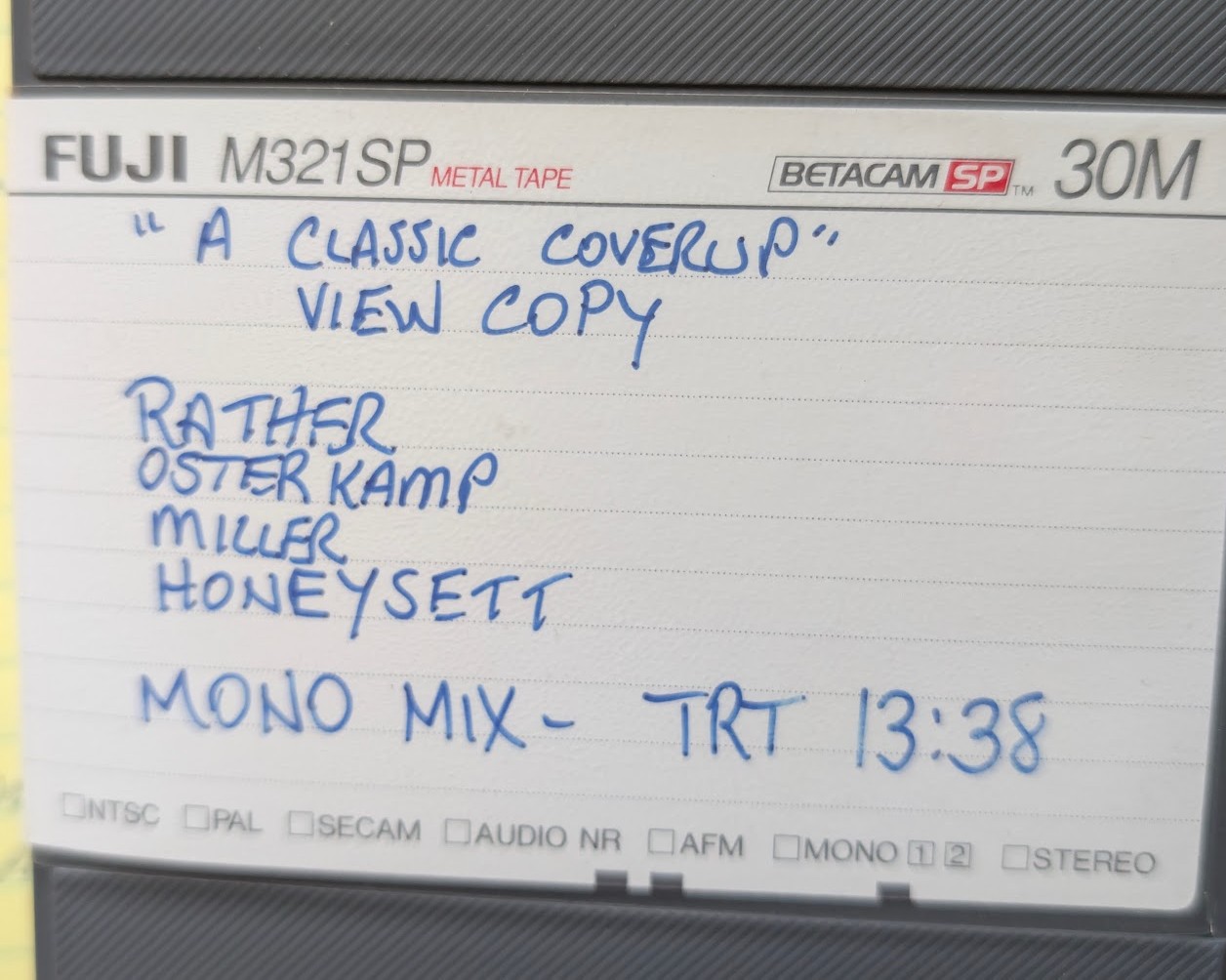
Box #39 was marked “Mustang Stuff”, a 14-minute story that changed product liability and motor vehicle safety. It was run twice. First as a Public Eye story presented by Bryant Gumbel. Then as a 60 Minutes story by Dan Rather.
See https://www.youtube.com/watch?v=cBjg_Z8hxDY
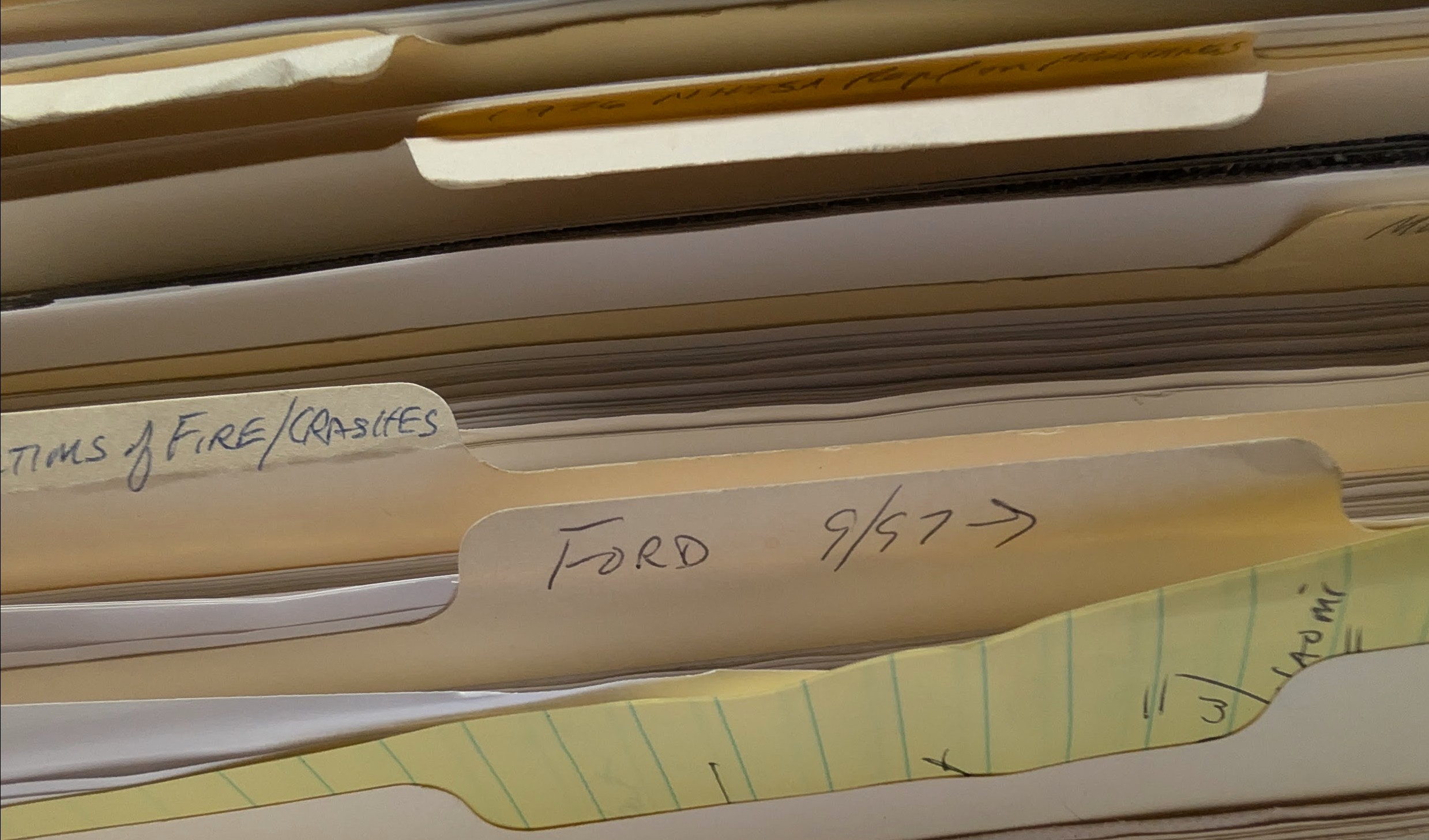
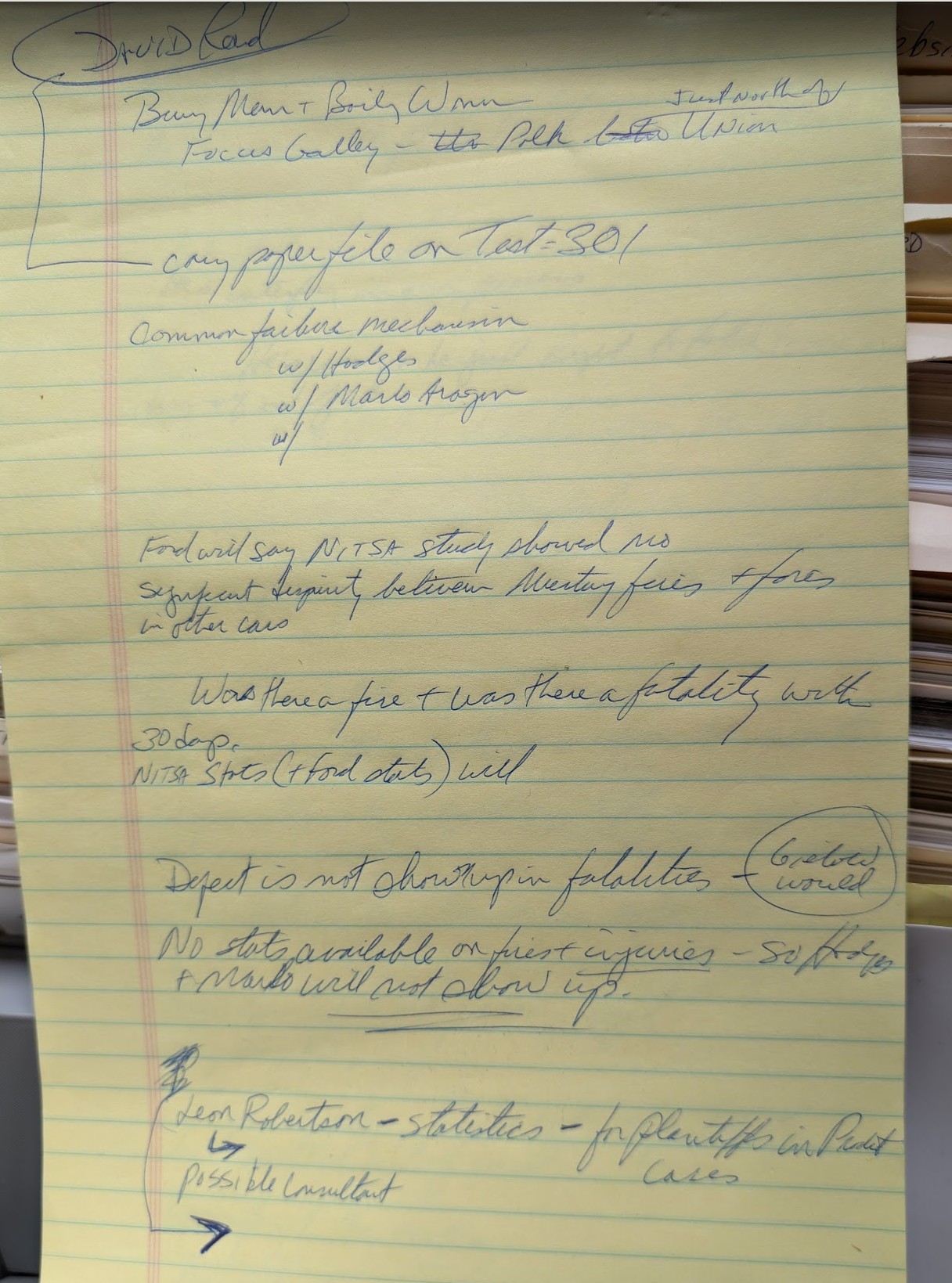
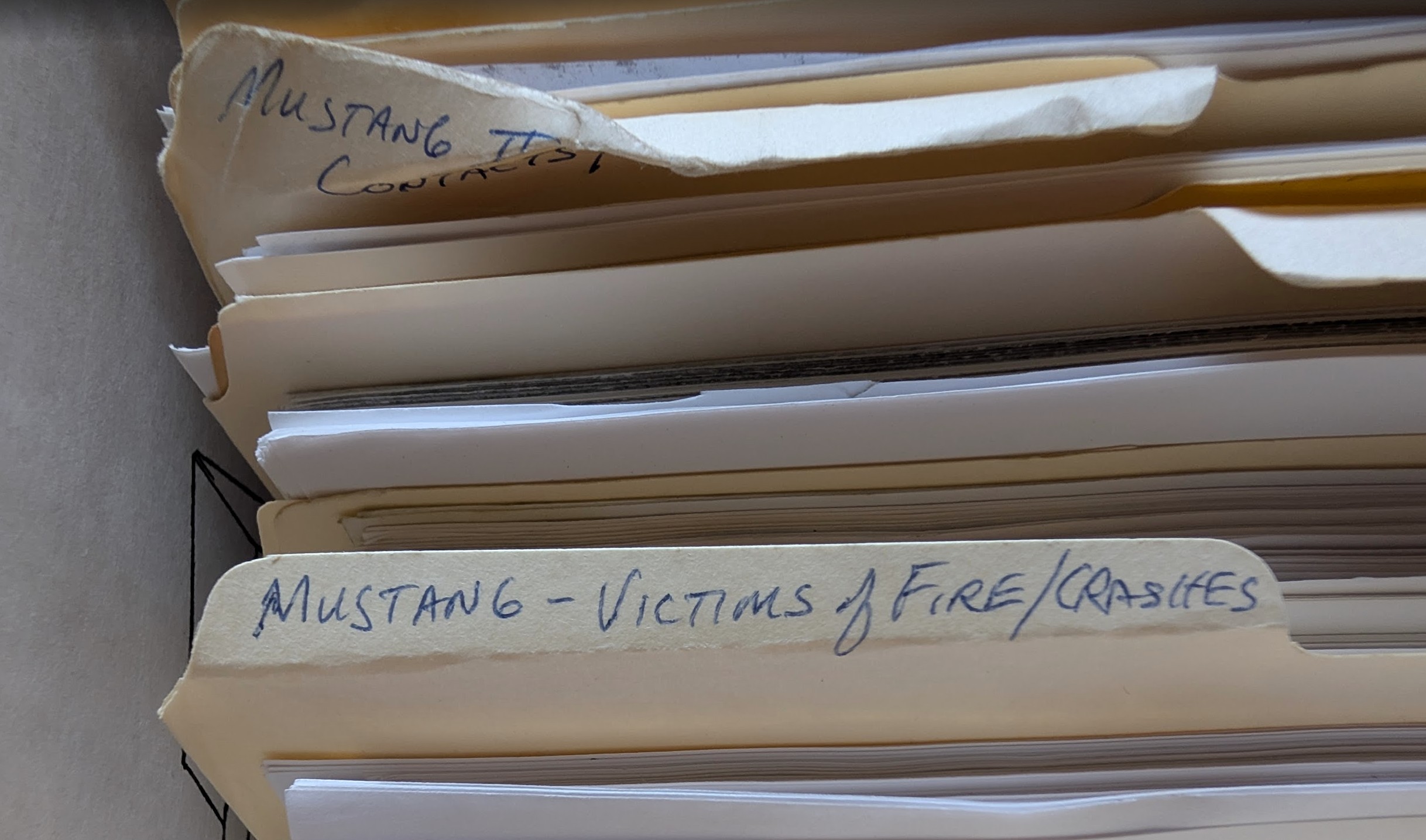
Behind those 14 minutes are months of research, carefully documented by George Osterkamp in organised file folders along with the raw footage owned by CBS but retained in an organised fashion by Osterkamp.
- Historians will benefit from the story behind the story.
- Students of broadcast news will benefit by learning how a top news producer pulled together reams of information to tell a story.
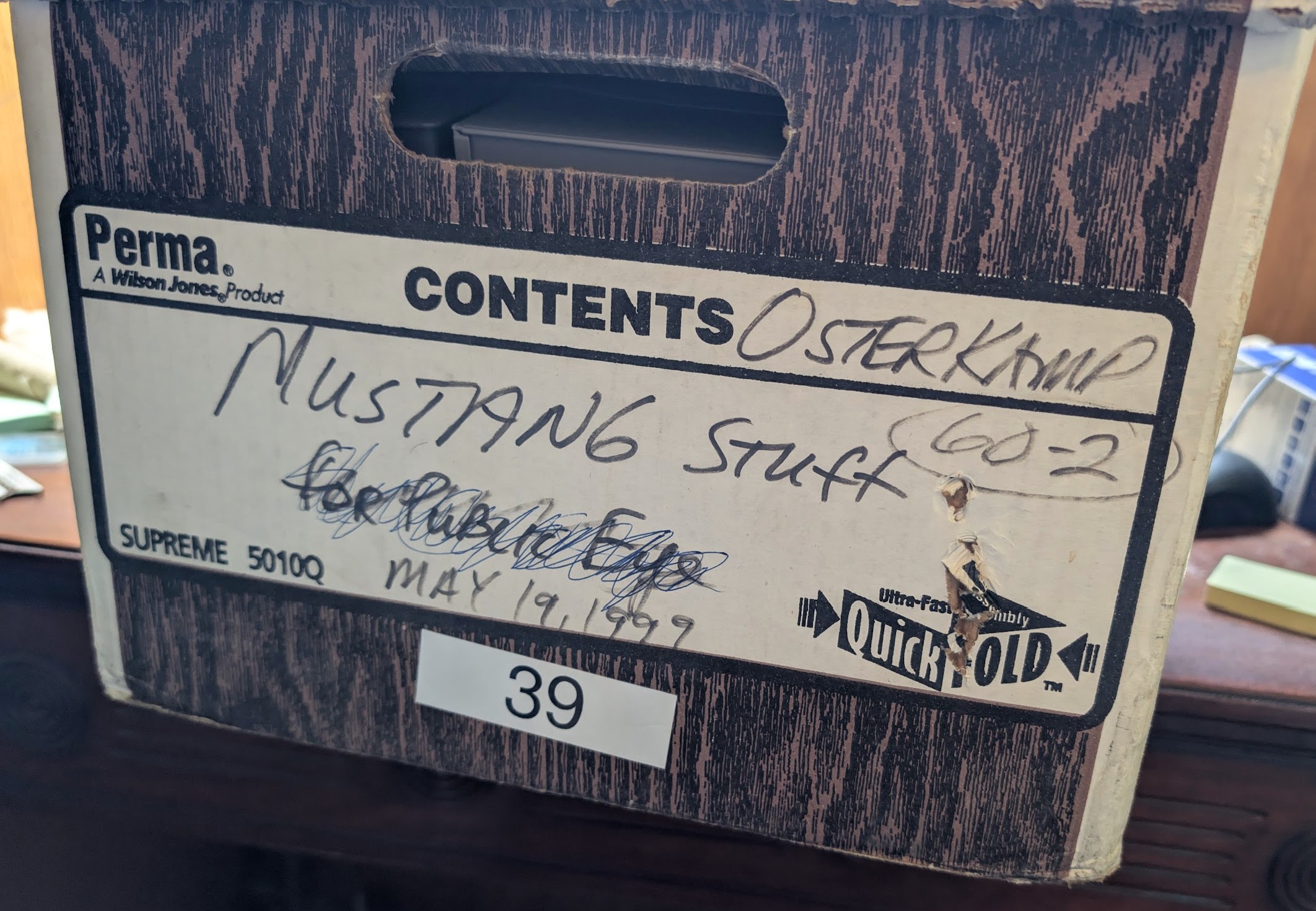
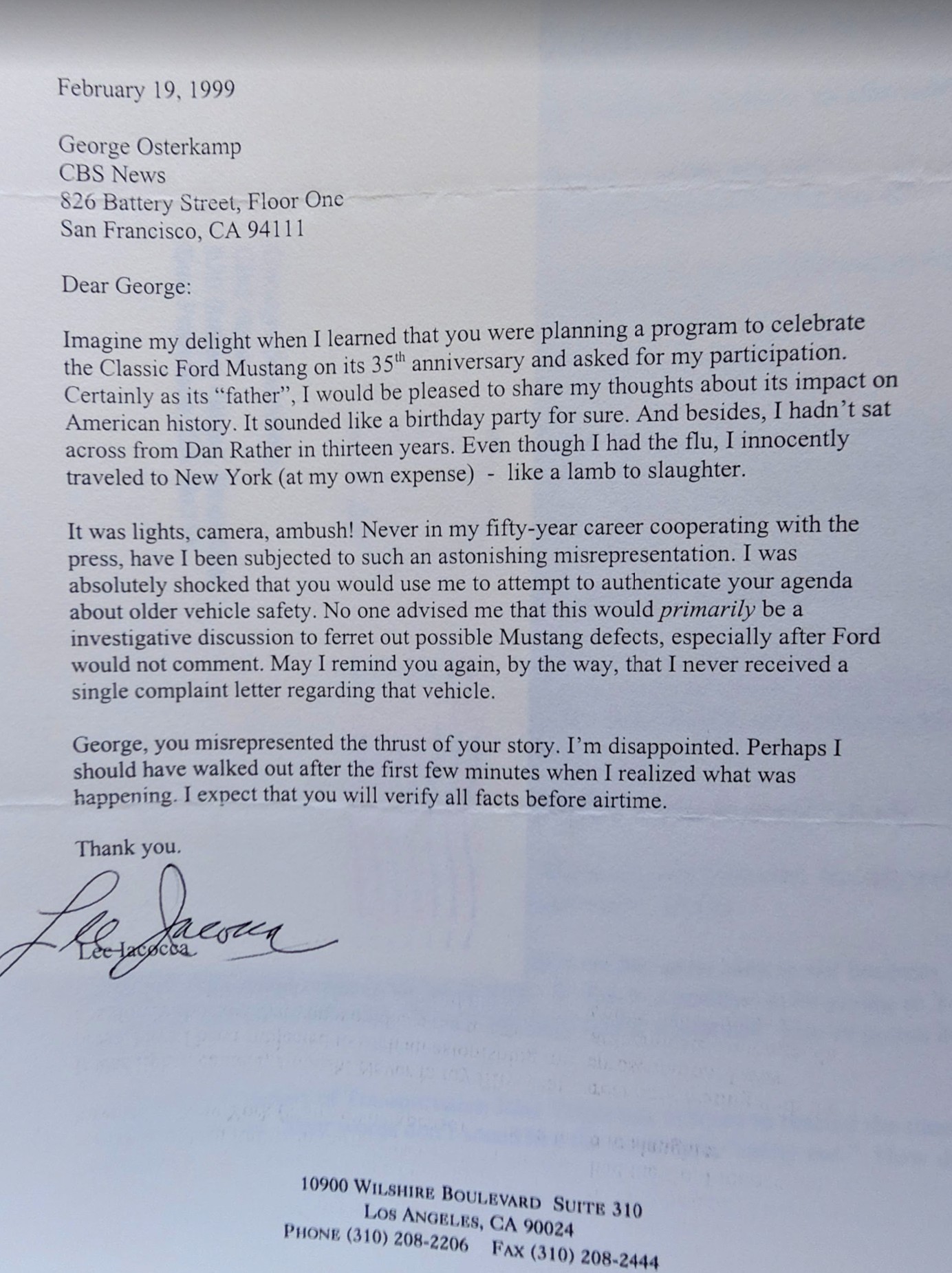
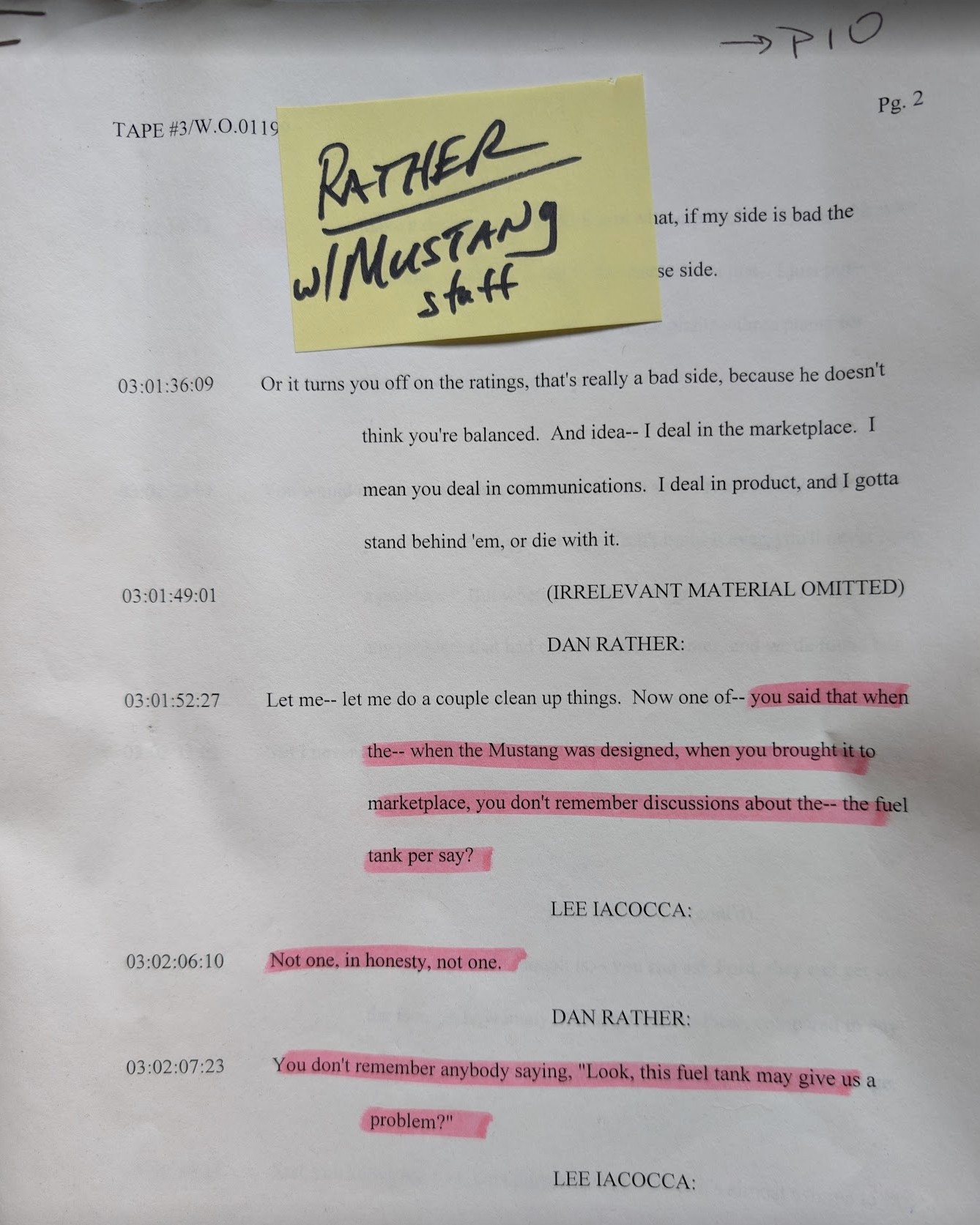
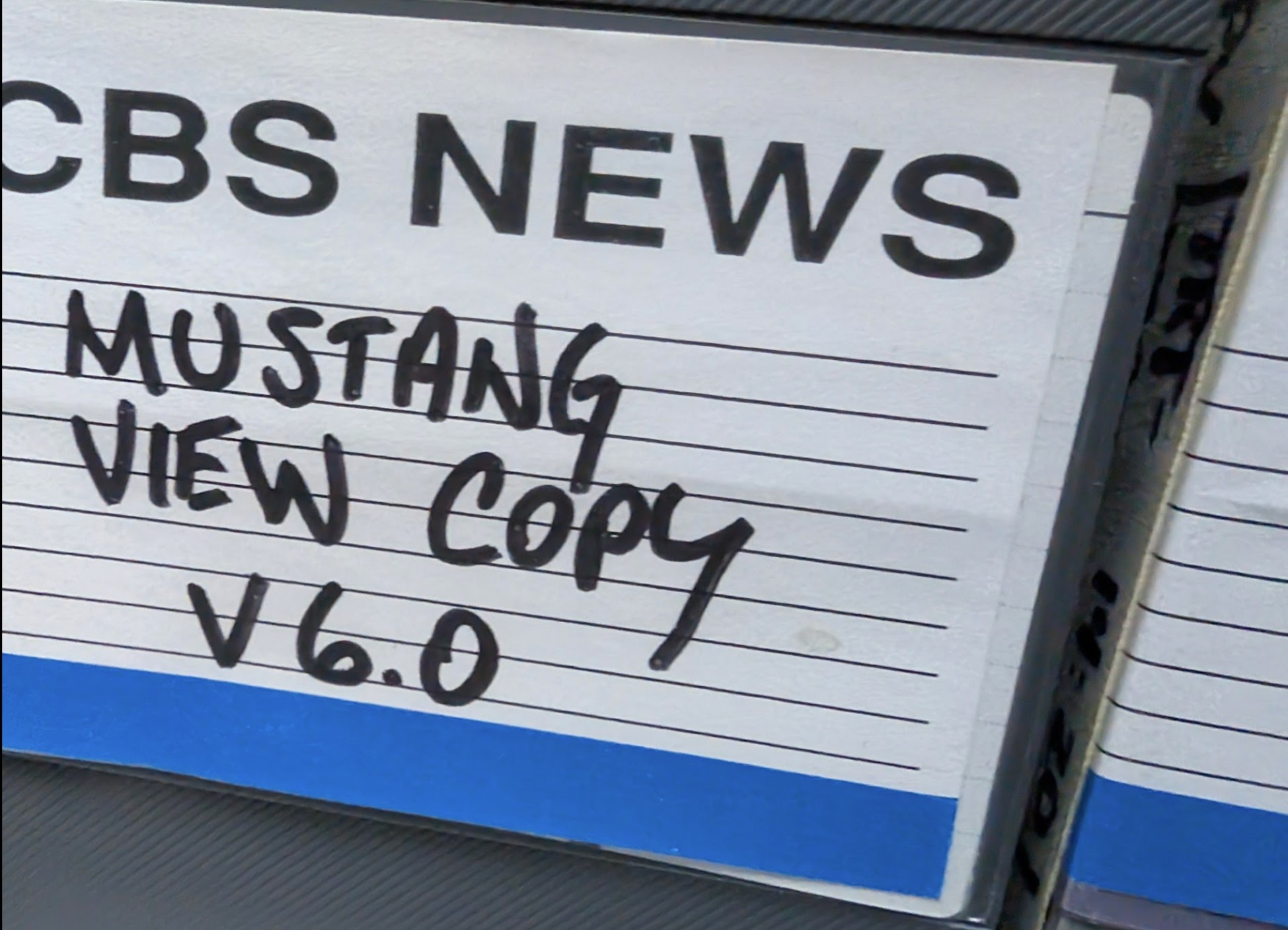
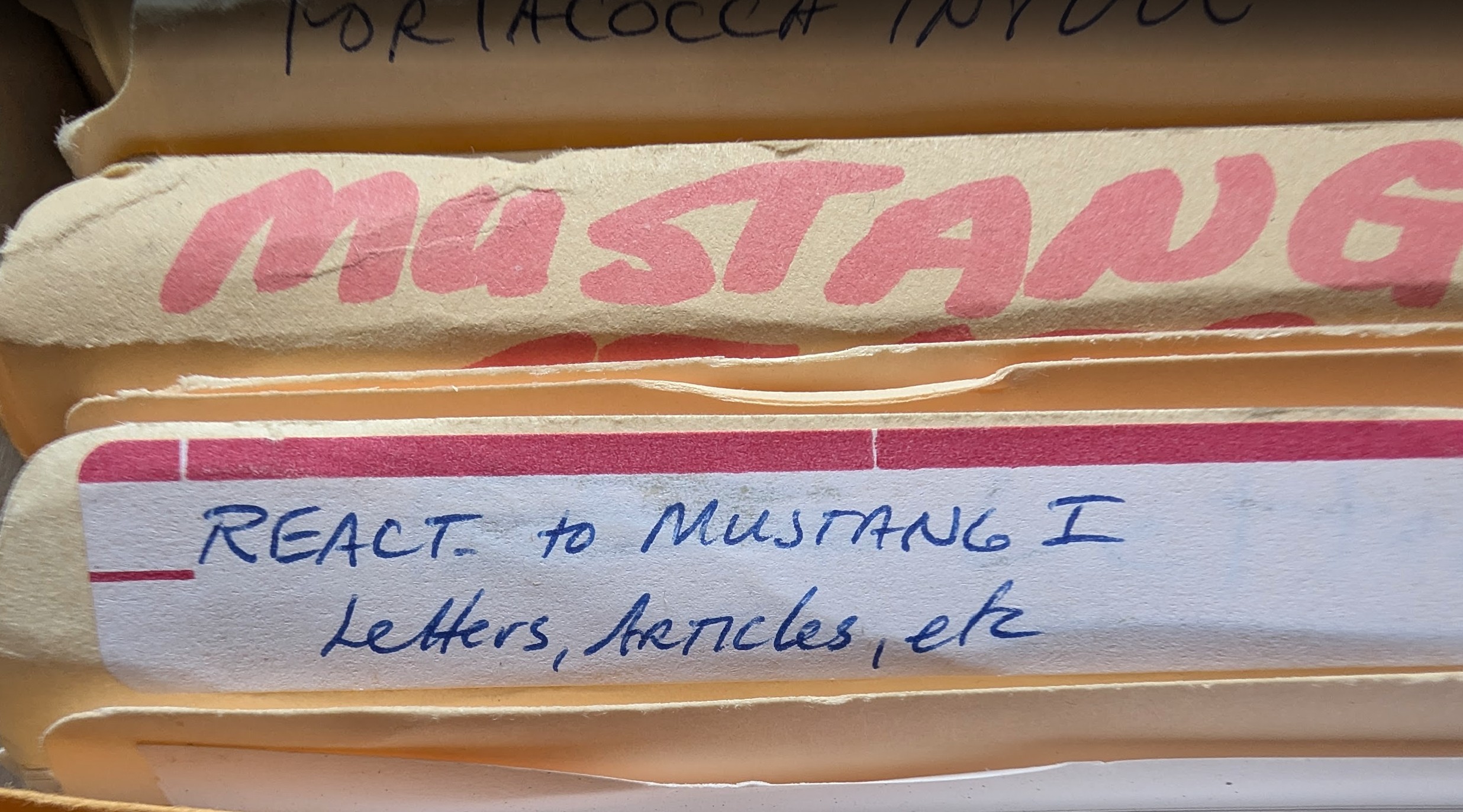
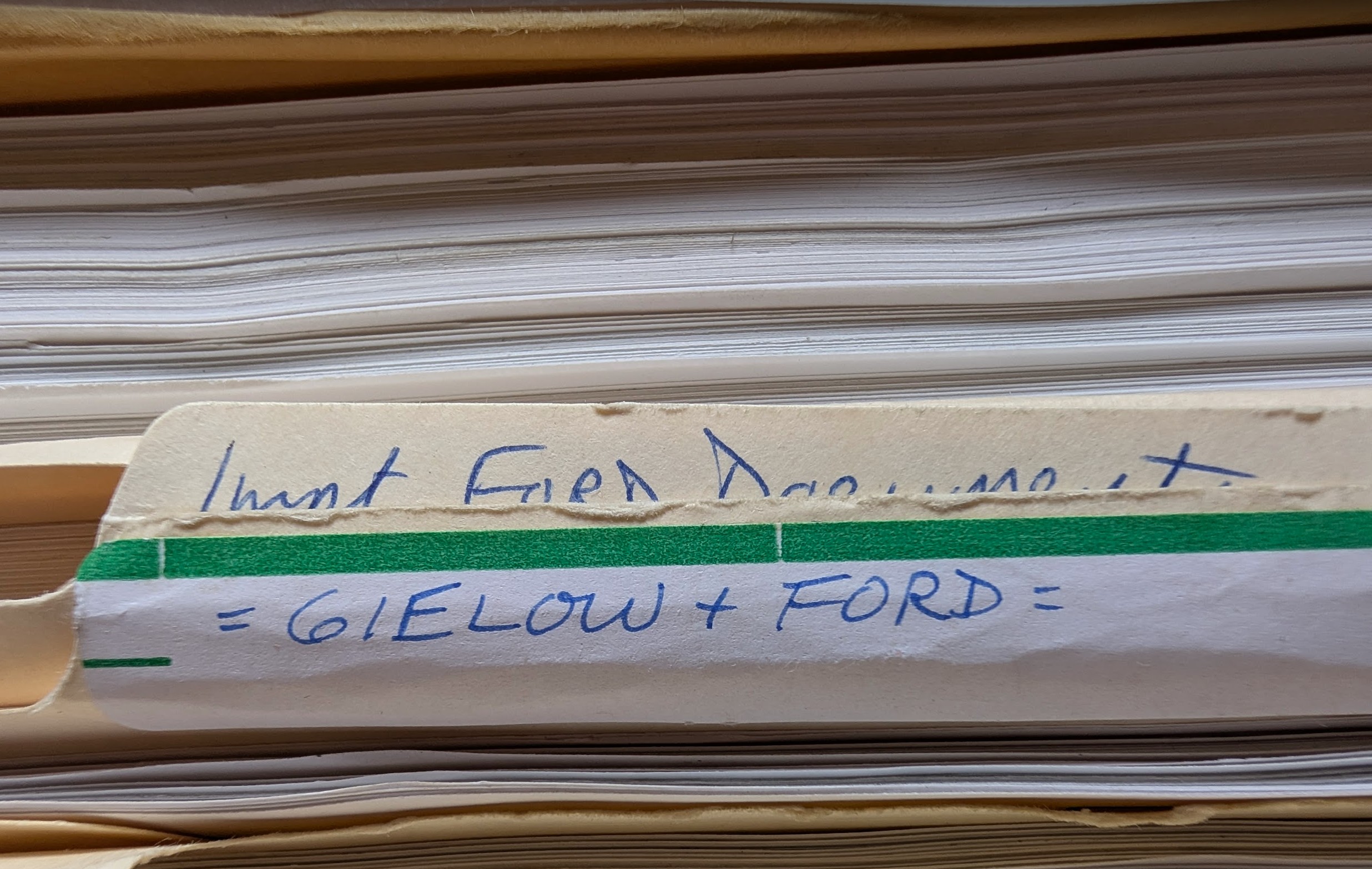
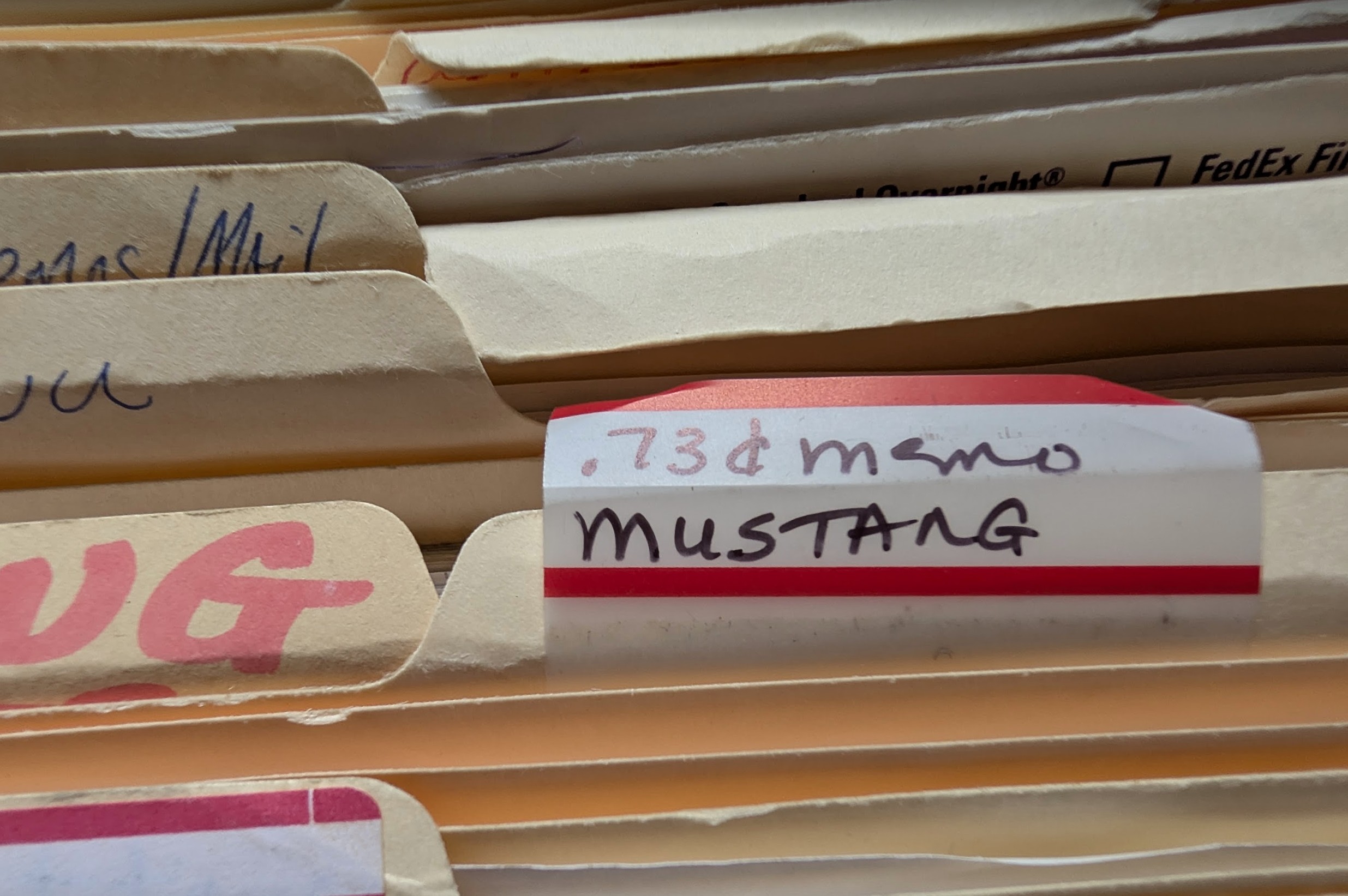
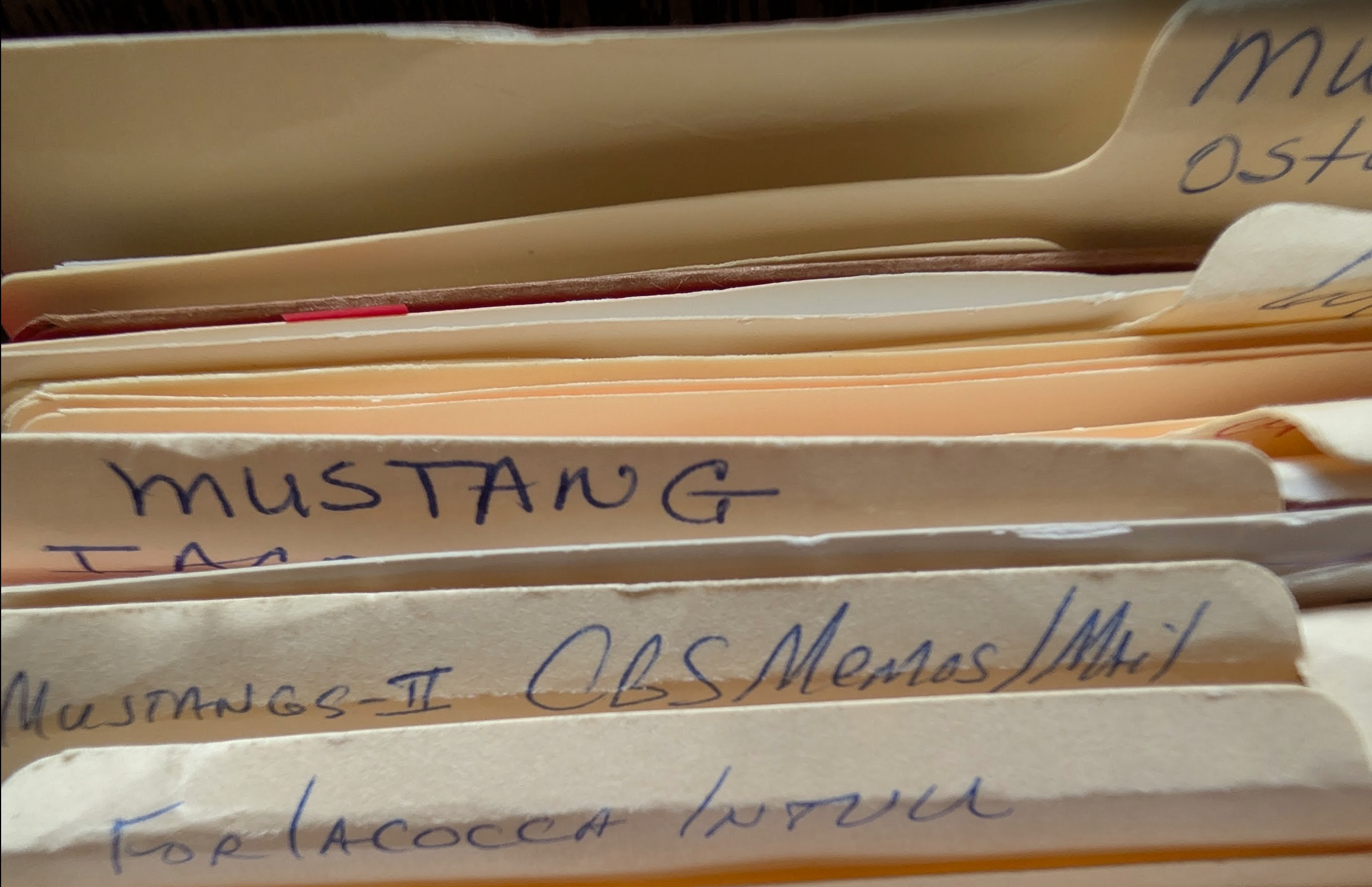
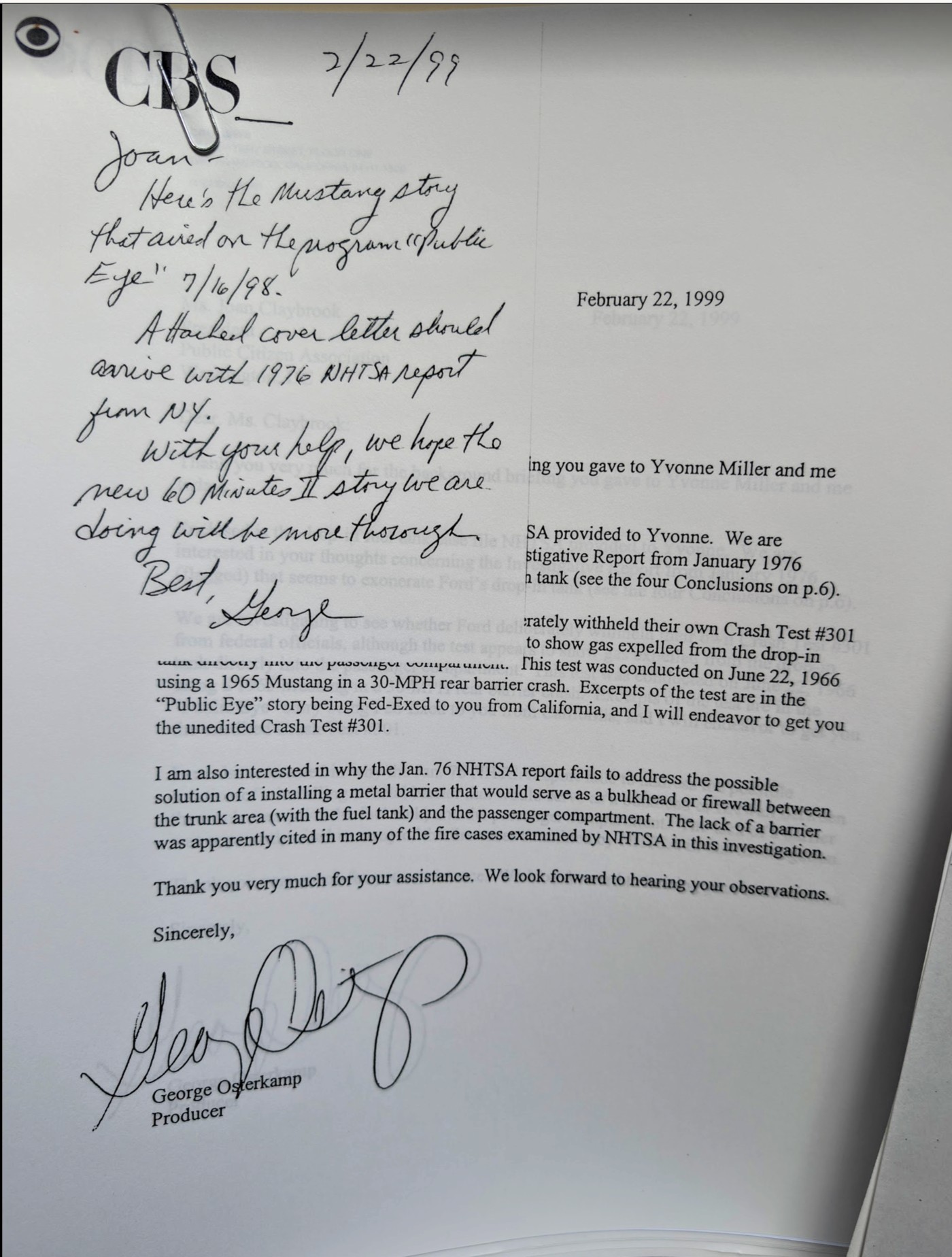
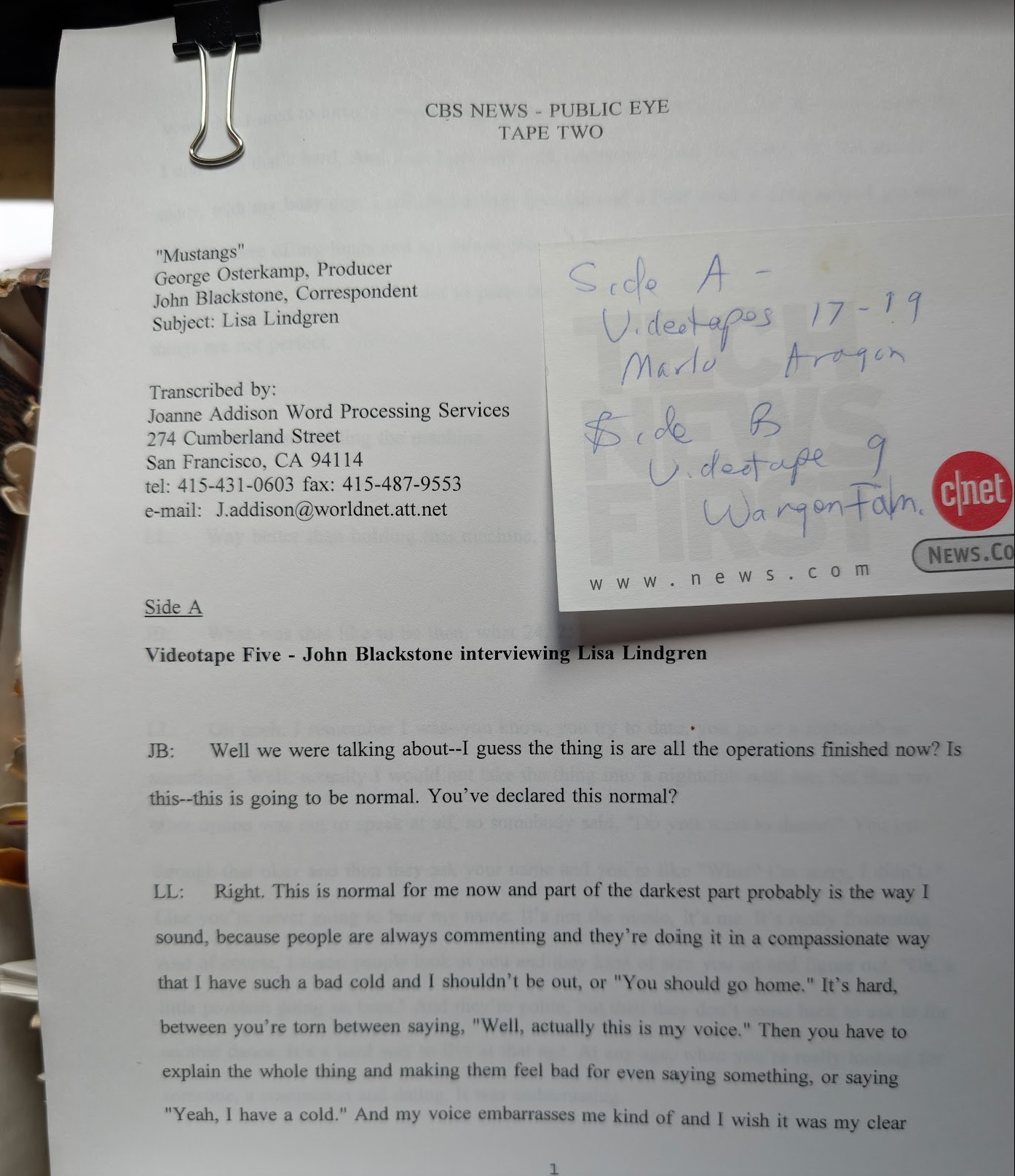
Below are random photos of documents and video tapes found in Box 39 “Mustang Stuff”
Scroll to the bottom and you will see the CBS Summary of the story.

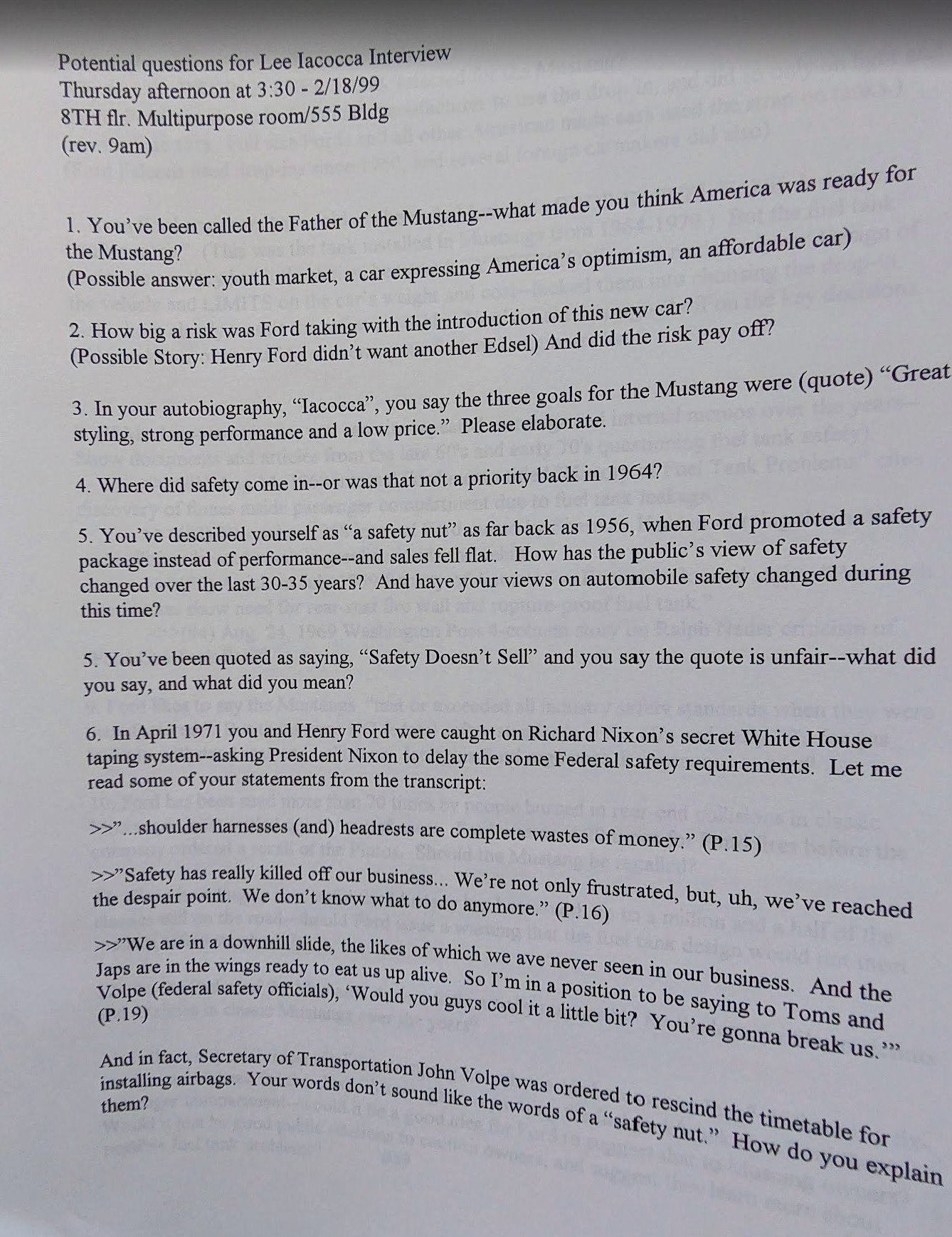
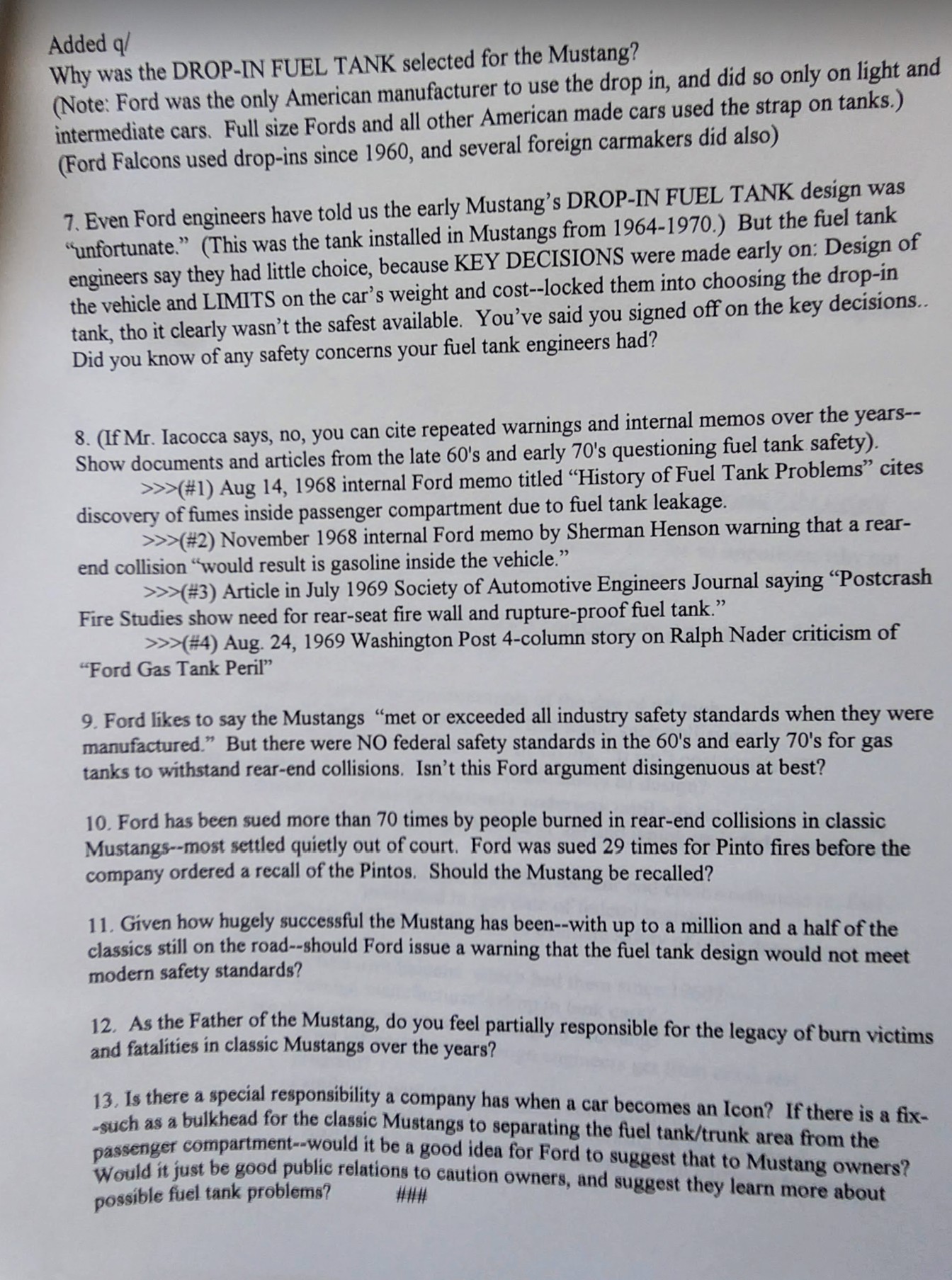
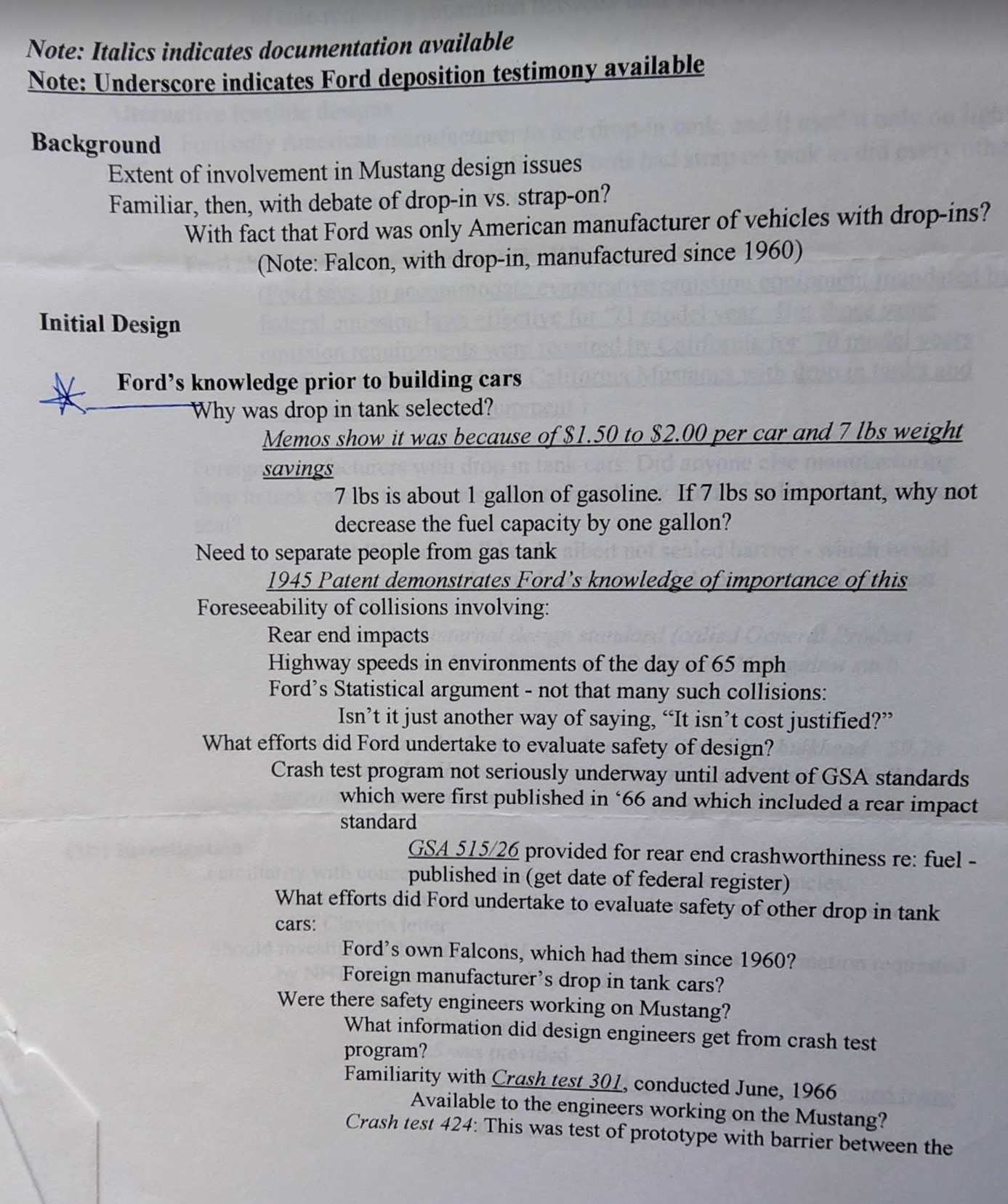
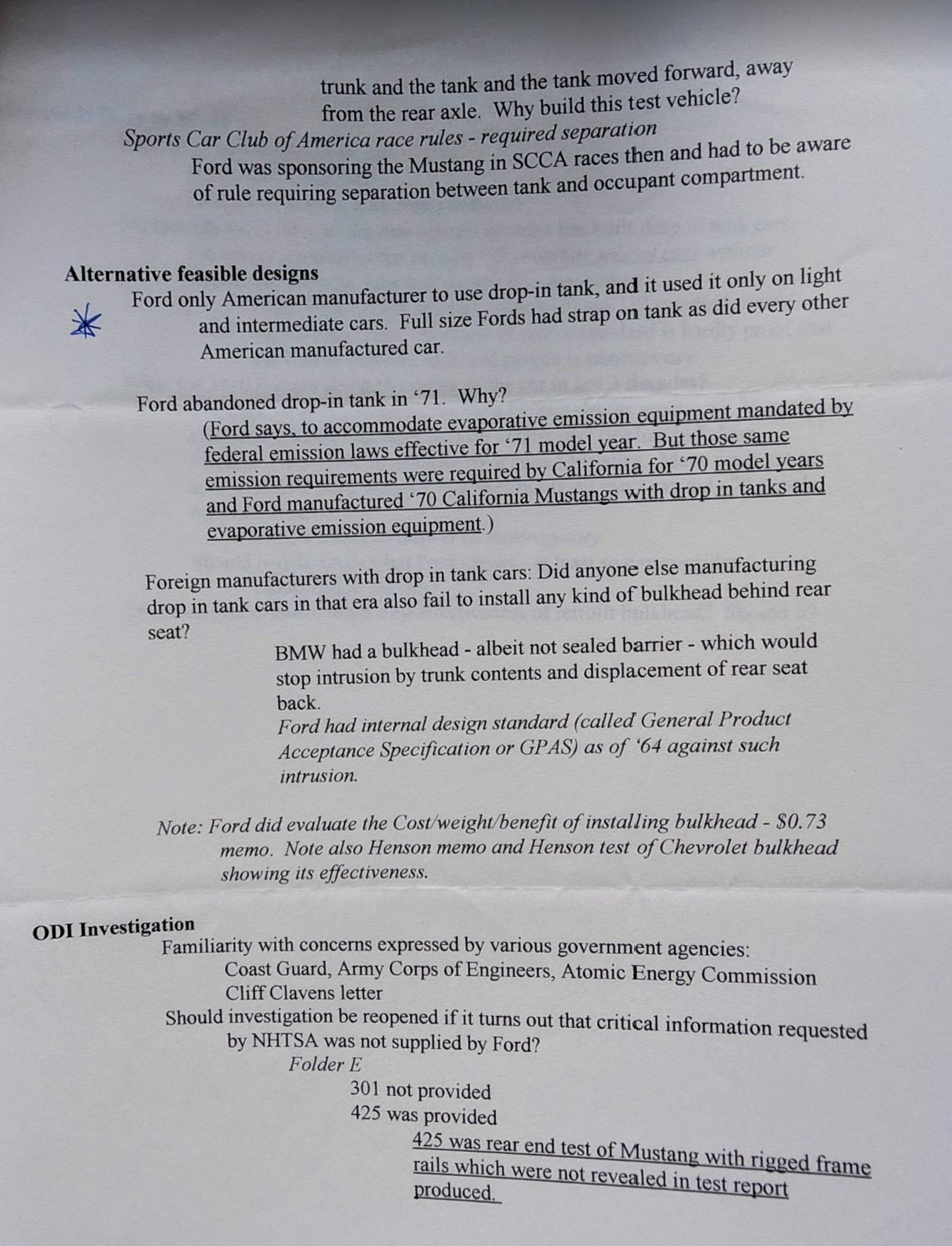
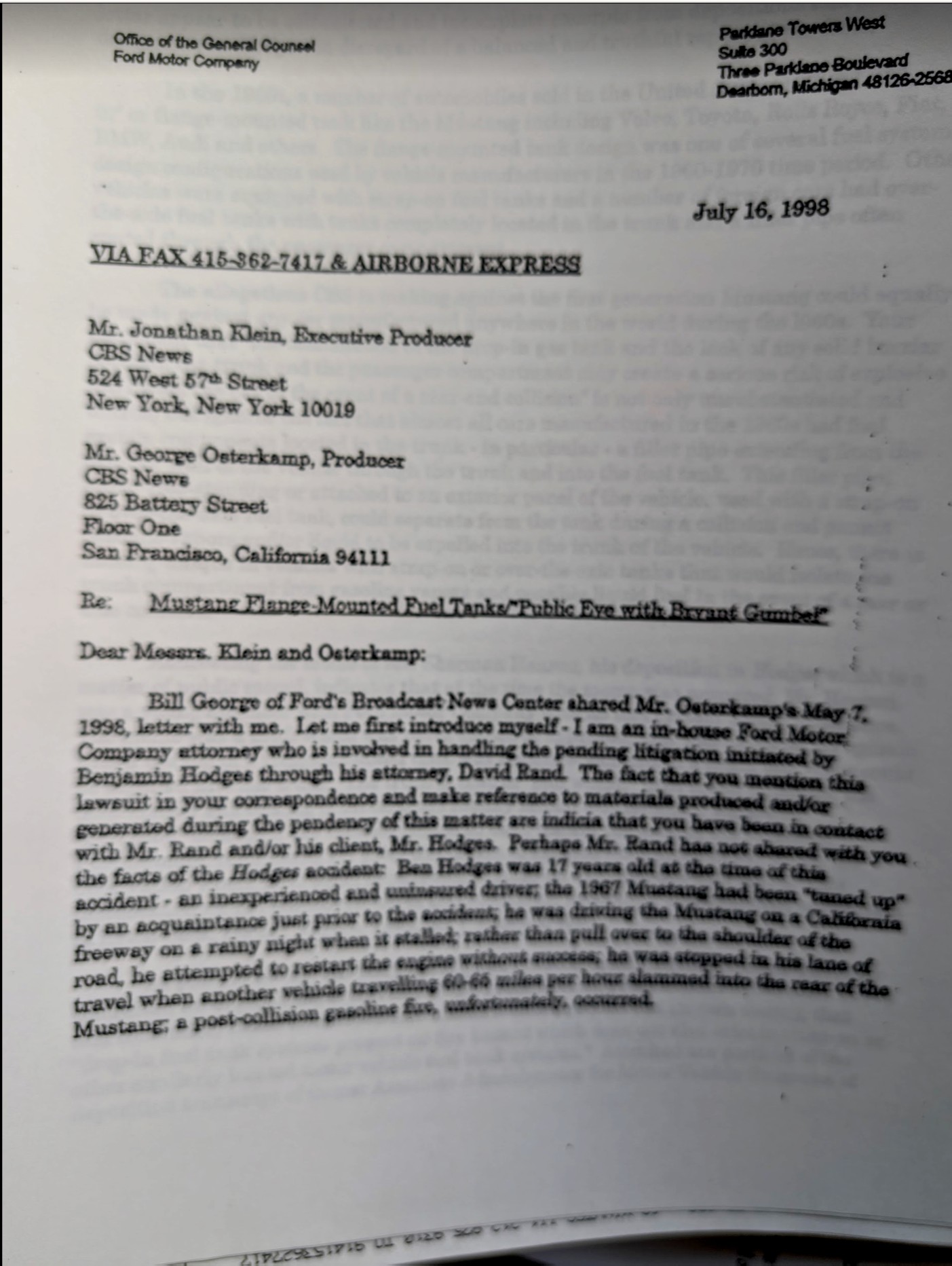
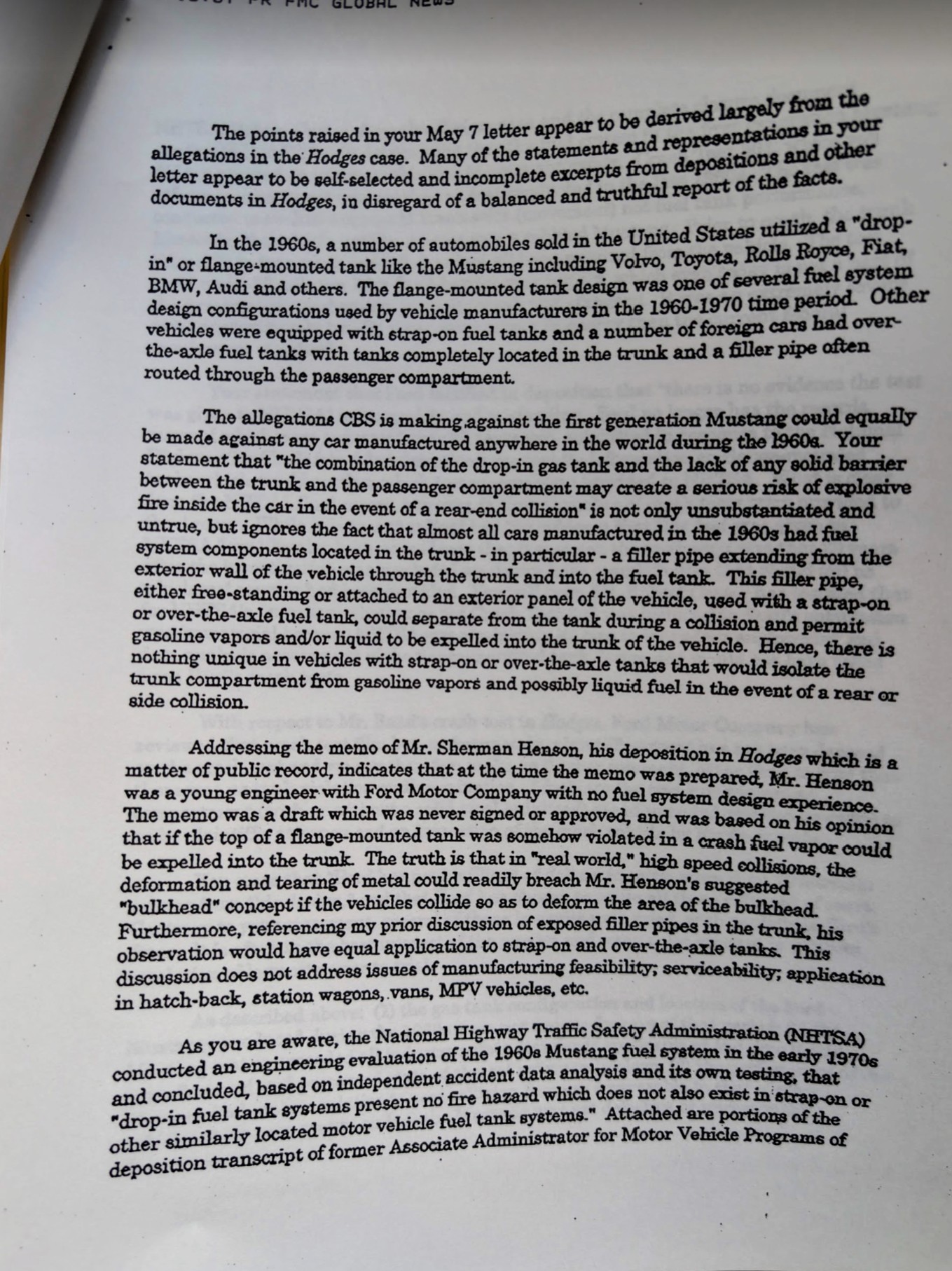
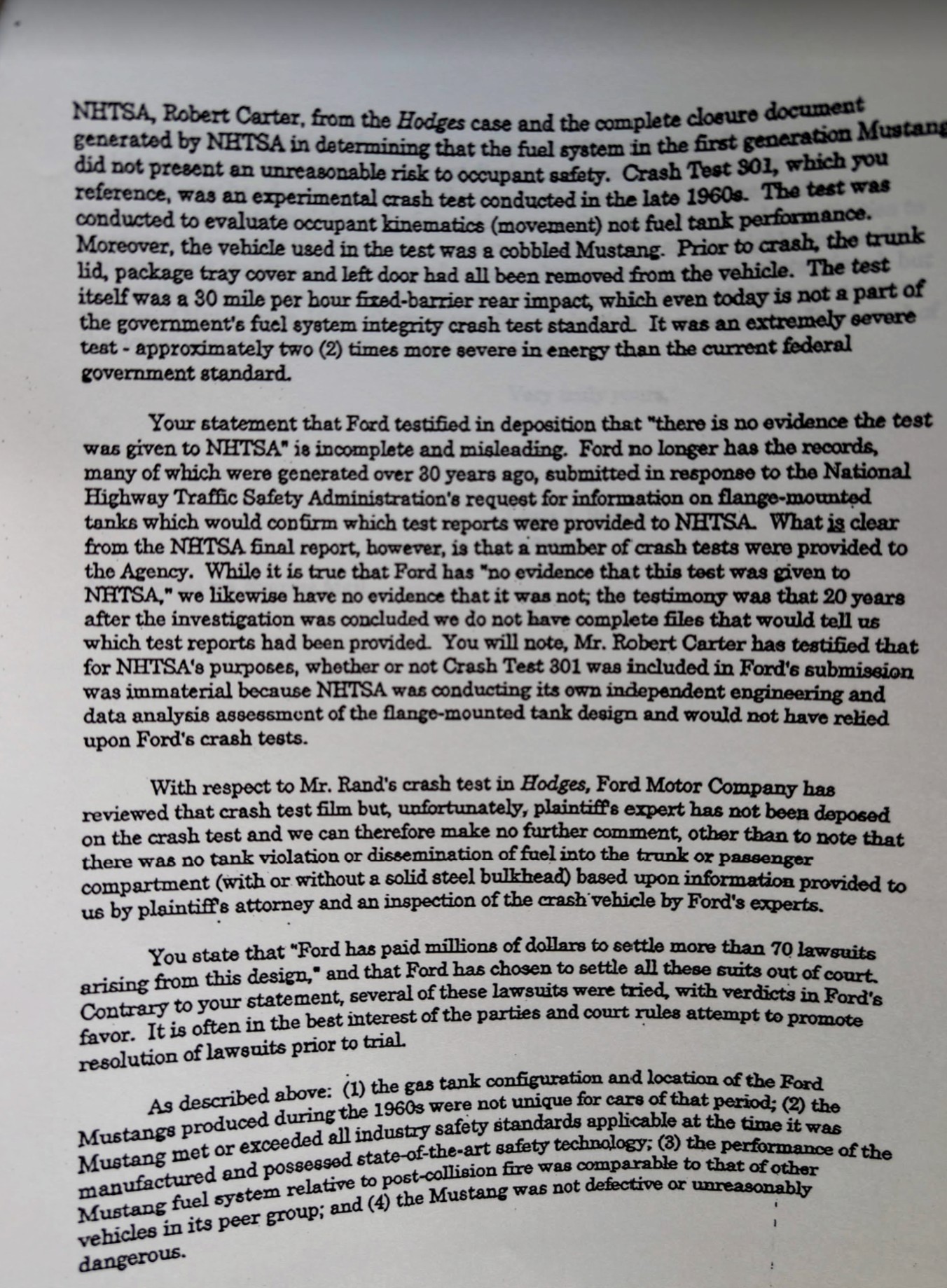
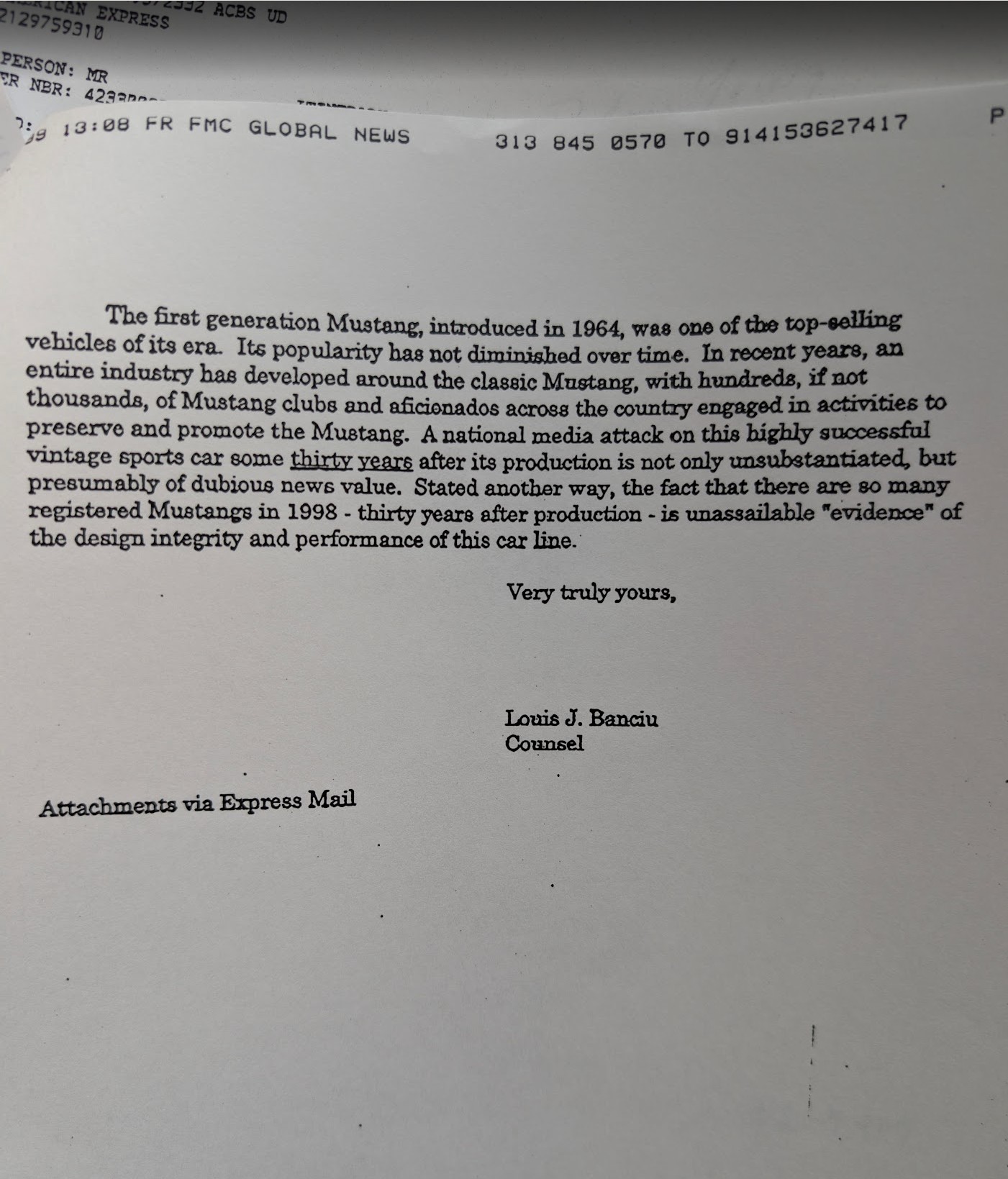
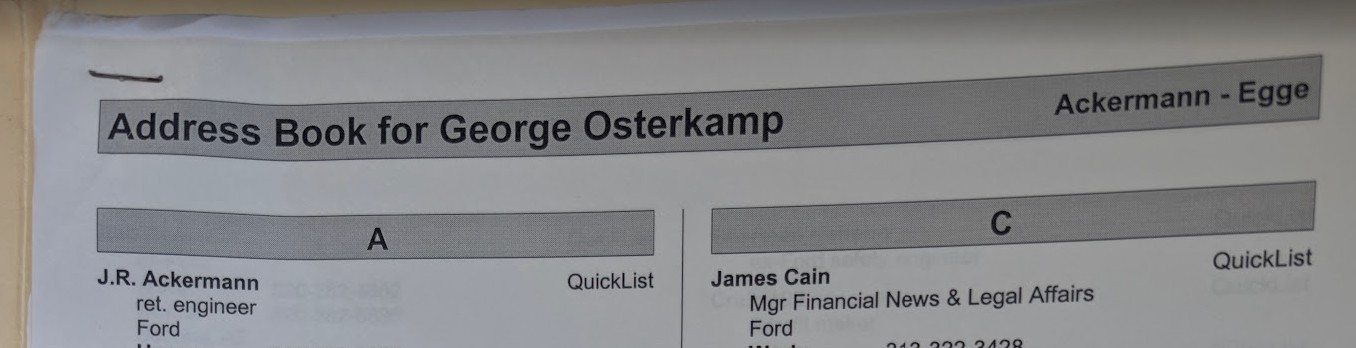
This page has been cropped to not display contact details. Many boxes have these address books.
Mustang: A Classic Danger?
Last summer, 16-year-old Harold Gielow fell in love with a 32-year-old–a classic Ford Mustang. On July 15, Harold was driving his beloved 1966 Mustang in the rain. The car hydroplaned and spun across the center line into the other lane, where an oncoming vehicle hit the Mustang in the rear. Gielow’s car exploded into flames.
Another driver, Craig Jackson, swerved around the skidding Mustang. A professional firefighter who has seen many car fires, Jackson was startled by the size of the exploding fireball in the Mustang.
“The car was fully engulfed in flames,” he says. “I mean, the flames were coming out the front window, the side windows.”
Continues Jackson: “I was going, ‘Why is this accident all of the sudden turning into a catastrophe like this?’ I mean, I still don’t know what really happened.”
Harold Gielow was incinerated. The police say Harold was going faster than conditions would allow. Ford Motor Company says Harold panicked and that he was killed on impact. Harold’s parents dispute that, and are troubled by a coroner’s report saying their son was burned to death in the Mustang fire. 60 Minutes II Correspondent Dan Rather reports.
“This is going to happen again, unless people know about it,” says Harold’s father, Harold Sr.
In looking into the accident, the Gielows learned a secret about the classic Mustangs, the ones built from 1964 through 1970. For more than 30 years, fires that erupted after crashes in the trunks of some classic Mustangs have spread into the passenger compartment. This American icon has left a trail of suffering and death.
All across America these old Mustangs are treasured so by so many people that they just won’t let them go. In addition to the amazing number of classic Mustangs still on the road –up to 1.5 million–there are many thousands off the road just waiting to be restored. From fields, from garages, from junkyards, classic Mustangs are being reclaimed, reconditioned and returned to the nation’s highways.
And every one of them carries in the trunk a potentially deadly defect, says San Francisco attorney David Rand. He’s representing the parents of Harold Gielow, and sued Ford before on the gas tank design. Because the top of the Mustang’s tank is also the floor of the trunk, Rand says, terrible car fires can erupt after even modest rear-end crashes.
“The gas tank is right here, inches away from [the driver],” Rand says, showing a reporter the layout of the car. “And the gas has a very wide opening to come right from the tank directly into where the people are.”
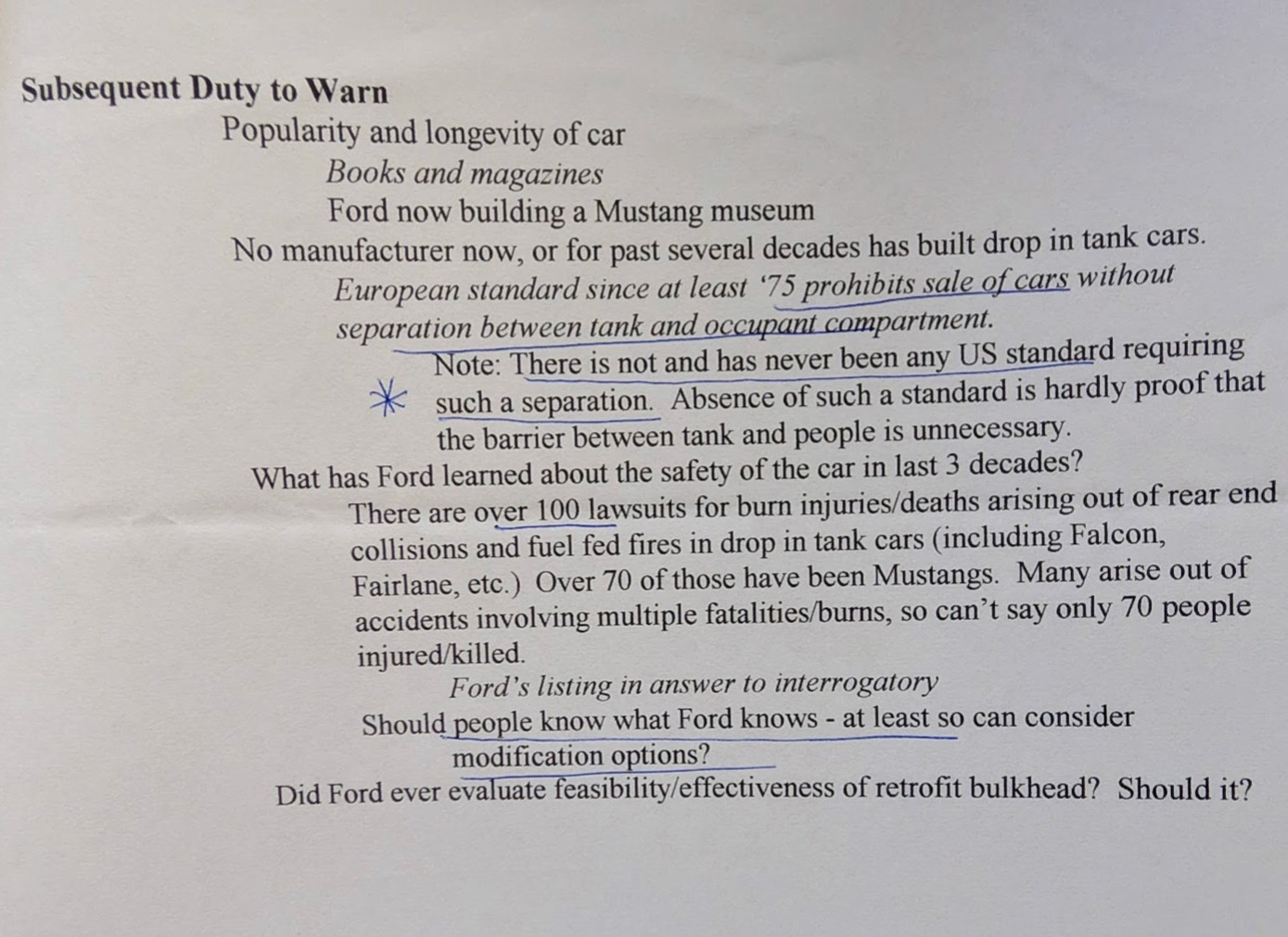
Ford has been sued more than 70 times by people burned in rear-end collisions in classic Mustangs. Most suits have been settled out of court, without publicity.
The fire in Lisa Hutchinson’s 1966 Mustang burned her vocal chords. Peggy Viel’s 1965 Mustang exploded in fire in 1972, leaving her with deep scars. Says Viel: “It’s a classy looking car but it’s a death trap.”
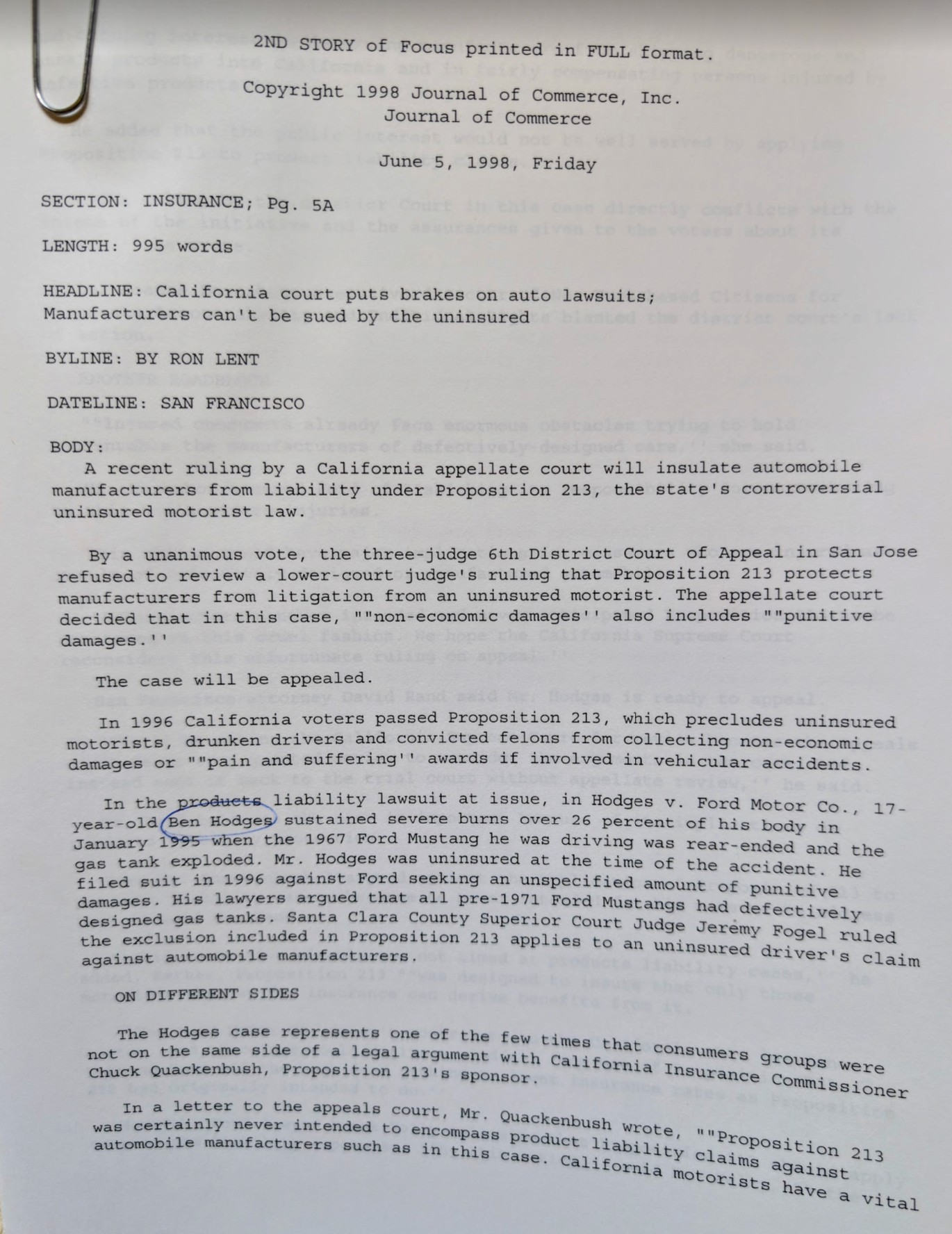
In 1995 Ben Hodges survived a rear-end crash in a ’67 Mustang. He would have walked away without a scratch–except for the burning gas that came into the passenger compartment and nearly killed him. “Before I was born they knew about this car,” says Hodges. “Before I was born there was people getting burned in this car.”
Ford has refused repeated requests to appear on 60 Minutes II to discuss the history of fires in the classic Mustangs. Ford says these were all high-speed crashes, and in a letter, insists that “the fact that there are so many registered Mustangs is unassailable evidence of the design integrity and performance of this car line.”
In fact, there are no reliable statistics on fires erupting in classic Mustangs. We requested our own expert analysis of U.S. government data on highway fatalities. The result: the death rate where fire occurred in rear-end Mustang crashes is more than three times higher than for all other cars of the same period.
While Ford chose not to speak with us on camera about the classic Mustang, Lee Iacocca did. A former president of Ford Motor Company, Iacocca was known as the father of the Mustang when it debuted in 1964.
“People said, ‘wow, that’s such a great buy, I’ll go in and I’ll buy air conditioning, I’ll buy a V-8,'” Iacocca remembers. “Before you knew it, we were making nothing but money. I mean, we were rolling in it. We were lucky.”
Safety, he admits, was not as big a factor in car design as it is today: “It was part of the specifications you laid out to the best of your ability,” he says. “But it wasn’t front and center. It wasn’t the priority.”
Iacocca says he doesn’t remember any discussions about fuel tank safety when the Mustang was designed. “Not one,” he says. Iacocca says he is stunned by the suggestion that rear-end fires in classic Mustangs indicate the car is seriously flawed.
“The reason I’m stunned is you don’t have that many successes in your life,” he says. “To tell me that the Mustang had more problems or severity of problems than any other car in its class, or maimed or killed more people, to me is poppycock.”
But it’s not just poppycock to some of Ford’s own safety engineers, who concluded early on that there was a problem with the Mustang’s fuel tank design. One of those engineers is Peter Bertelson. He has never before spoken publicly about his years at Ford, when the Mustang was marketed as a sports car Americans could afford.
Says Bertelson: “It would clear the air to say, ‘look, we goofed’.”
“It was suposed to be a low-price car. And it was. And in order to make it lighter and less expensive, they did come in with this drop-in fuel tank.”
Ford was the only American manufacturer to use a drop-in fuel tank before abandoning the design in 1971. On Mustangs built from 1964 through 1970, the gas tank was simply dropped into a hole in the trunk. If the tank is ruptured in a rear-end collision, there is no solid barrier–just a flimsy seat back–between the passengers and the gasoline.
“It’s not a safe way to put fuel into an automobile,” Bertelson says.
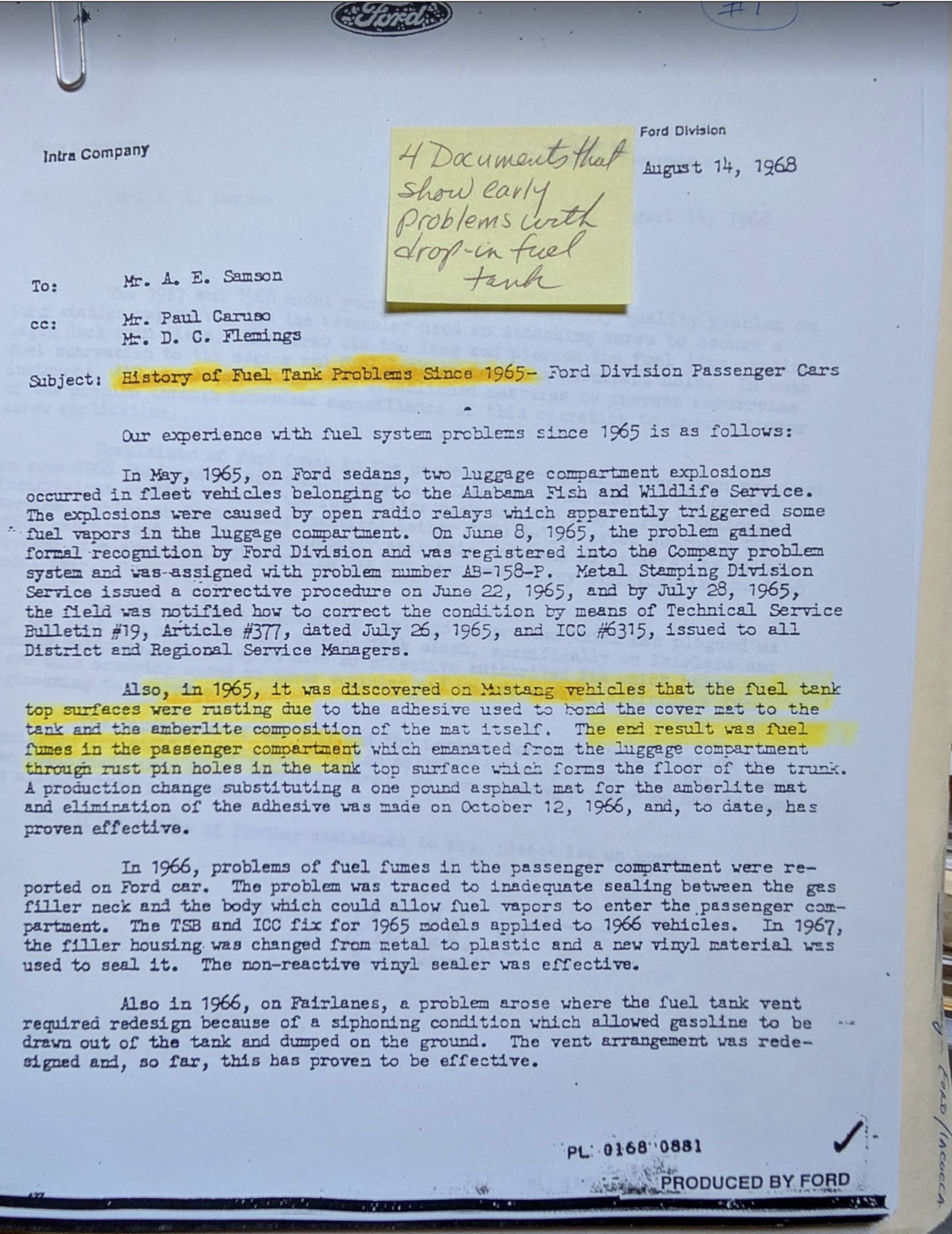
To this day, Ford calls the system “reliable and safe.” But Bertelson remembers there was early and widespread recognition at Ford of the dangers of the Mustang’s fuel system. In 1966, he is absolutely sure that “all the engineering executives were aware of the — problems of the drop-in tank.”
Plans were made to change future models. But the danger in the classic Mustang was never publicized. Mustang sales soared, especially among baby boomers. Even President Clinton owns one. Style sold cars, not safety, says Lee Iacocca, who insists he tried. He calls himself the “Father of Safety,” and notes that he was criticized for it at the time.
Iacocca was criticized when he tried to sell cars that wouldn’t start until the seatbelts were fastened. Congress passed a law against that. But Iacocca also pushed all the way to the White House for a delay in federal safety standards. In a meeting with President Nixon, he was recorded on the President’s secret taping system, saying safety was killing the American car business.
“I didn’t know I was being taped at the time–how the hell would I know that?” Iacocca says when reminded of this. In talking to President Nixon, Iacocca said: “Shoulder harnesses and head rests are complete wastes of money. Safety has really killed off our business.”
“We wanted to make sure we survived. So we talked differently then,” Iacocca says now.
In building a case against Ford, Rand, the lawyer, discovered film of a decades-old Mustang crash test–Ford Crash Test 301, which he says shows unambiguously the danger of the drop-in gas tank.
“Very clearly this dummy’s head is just being saturated with gasoline,” says Rand, showing the tape to CBS News. “All of this gasoline, if it had been ignited, would have definitely killed all of the people in the car.”
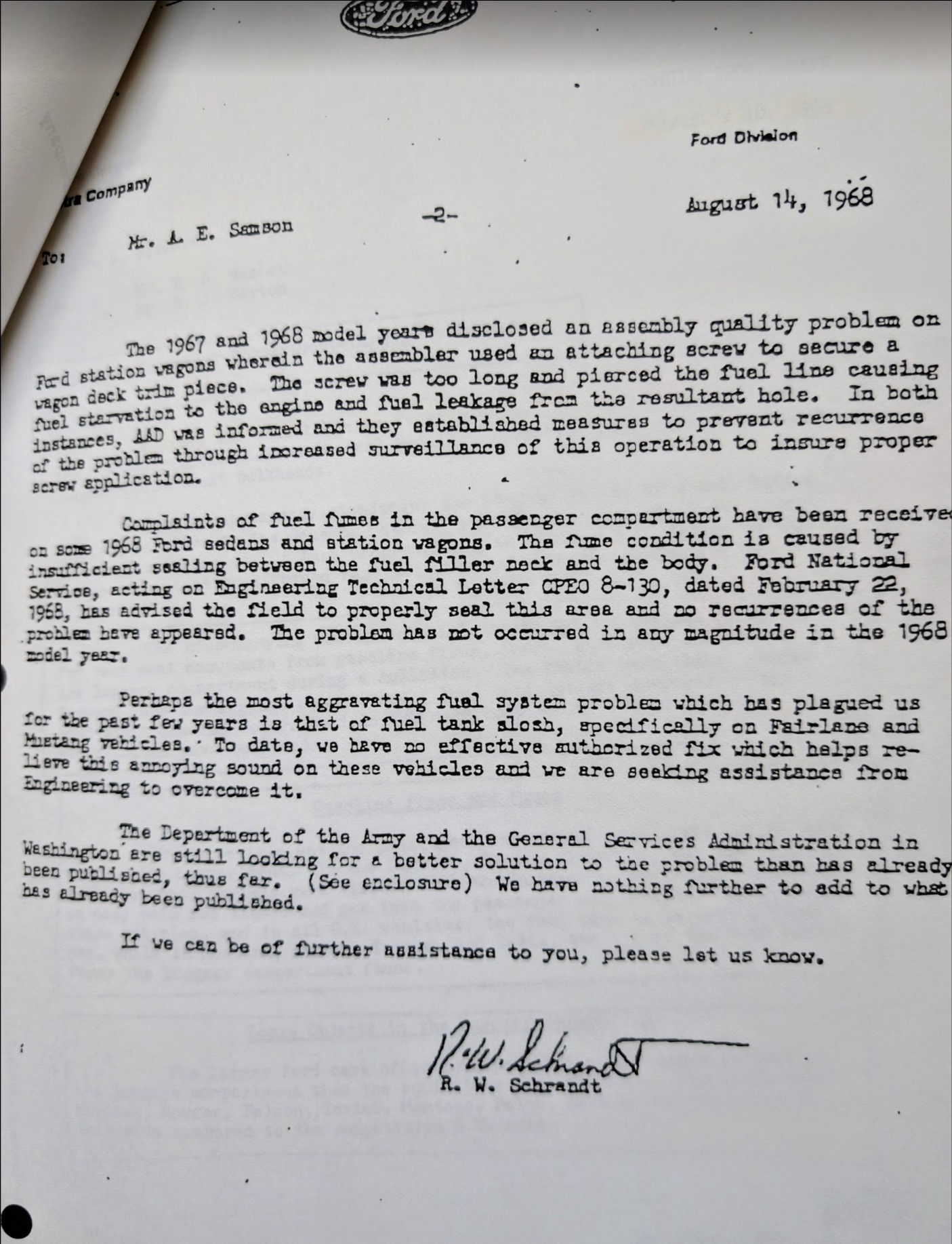
Another element in the case against Ford: 30 years before Harold Gielow’s fatal accident, a young Ford engineer named Sherman Henson wrote in 1968 warning his superiors: “a fuel tank rupture during a rear-end collision would result in gasoline inside the vehicle.”
“Ford knew this accident was going to happen,” says Rand, who flatly accuses Ford of suppressing the information. “They knew it 30 years ago. And they know it’s going to happen again.”
That charge has yet to be decided in court. Ford violated no laws or federal safety standards on the classic Mustang. But there was no safety standard on rear-end crashes back then, recalls Joan Claybrook, formerly the nation’s top highway safety official. Says Claybrook: “There was no government standard that covered it. It met all government standards, but there wasn’t one that dealt with that problem.”
In 1976, a year before Claybrook took over, the National Highway Transportation Safety Administration reported classic Mustang fuel tanks “present no fire hazard which does not also exist in…other fuel tank systems.” But Claybrook, now a consumer advocate, believes Ford passed by withholding from investigators its own crash test 301.
“Ford knew and never told the Department of Transportation during the course of this investigation that when the car was hit in the rear and the fuel tank came forward fuel could spew out into the passenger compartment,” she says. She says that Ford withheld the crash test they had done from the Department of Transportation. Department records show Test 301 was not submitted. But Ford officials maintain that they were fully responsive, and that Test 301 was not designed to test fuel tank integrity and not relevant to the safety of the drop-in tank.
Why would Ford not fix the problem? Claybrook has an idea: “They hated recalling cars, particularly then. And Lee Iacocca, who was president of Ford, loved that car. He helped to design it. And so they didn’t ever want to admit that they had a problem with their best car on the road.”
Iacocca insists he was never told of problems with the drop-in tank, and says: Don’t blame the auto makers because old cars do not have the same safety equipment as new ones.
Says Iacocca: “To me it’s almost asinine to say, ‘Anything that grows old you gotta turn back the clock and make good on that. But what the hell would you do with a black and white TV set today? You’d throw it away.”
But there are repairs that could be made, say Harold Gielow’s parents, and Ford could inform people of dangers learned about in the classic Mustang: “They did know there was a problem with the car. They knew that based on their own test, based on their own safety engineers. And they did nothing about it. They didn’t warn people.”
Liz Gielow wants Ford to warn people now. “Maybe some other little boy or girl will grow up, go to college, get married, have children,” she says. “Harold never will do that. He’ll never do that.”
The family has not yet sued Ford, but is on a safety campaign to get people out of classic Mustangs. They may find an unlikely ally in Lee Iacocca. At 74, he’s out of the car business–and into te business of selling electric bicycles. His advice today to owners of classic Mustangs who are concerned about safety: “If you really want a real safe one, trade up. After 35 years it’s time to dump that old Mustang.”
Site produced by David Kohn. Segment produced by George Osterkamp;
© 1999 CBS. All rights reserved.
(copyright CBS News – reproduced for educational purposes)
From: https://www.cbsnews.com/news/public-eye-archives-18557/ (copyright CBS News – reproduced for educational purposes)
The Vintage Mustang:
Legend or Lemon?
The Ford Mustang first appeared in 1964 and charmed the country with its all-American style and grace. The car was immediately embraced as a classic. In the movies, the vintage Mustang has been the car of choice for our heroes. Even today, more than 30 years after its debut, an estimated 60 percent of Mustangs built between 1964 and 1970 are still on the road. But could it be that the country’s most cherished automotive legacy hides a terrible secret?
In 1995, 17 year-old Ben Hodges was driving a 1967 Ford Mustang on a California Interstate. The car stalled and Ben was rear-ended. The gas tank burst, spewing gasoline liquid and vapors into the passenger compartment. Instantly, Ben was severely burned. His accident is one of over 70 similar incidents involving vintage Ford Mustangs, and he blames the design of the car.
On vintage Mustangs, the gas tank is simply dropped into a hole in the trunk. There is no solid barrier between the passengers and the fuel tank. This gas tank design, an alternative to the widely used strap-on gas tank which is situated apart from passengers, near the rear bumper, was used in a number of mid-size Ford cars in the late 1960’s for minimal production cost. In fact, an internal Ford memo reveals that the motor company saved $2 per car.
For years it has been suspected that drop-in fuel tanks present catastrophic potential for fire to severely burn and kill people. A Ford rear-end crash test conducted in the 1960’s clearly shows the crash dummies getting showered with gasoline upon impact. But in the 1960’s and 1970’s, there were no federal safety standards for fuel tanks to withstand rear-end collisions. Several other car models had fire problems too, including Ford’s own Pinto. Ford was sued 29 times for Pinto fires before the company ordered a recall. Ford has had over 70 lawsuits involving classic Mustangs and people like Ben Hodges want to know why the car is still on the road. Although Ford declined to be interviewed, visit Spotlight to read the letter from a Ford attorney addressing the issues raised on Public Eye.